









Amazon UK’s dog and cat food category has entered a structurally mature and highly competitive phase.
Analysis of the latest 12-month performance data shows that category leadership is no longer defined purely by brand size. Instead, operating model, pricing strategy, and commercial execution are now the primary drivers of growth and profitability.
Vendor remains the dominant route to market by revenue. However, Seller-led brands are achieving faster growth, commanding higher price points, and gaining market share.
This reflects a fundamental shift in how pet food brands are using Amazon, from a scale channel to a commercial profit driver.
Amazon is no longer simply a distribution channel. It is now a primary commercial battleground.
Dog Food Category Analysis
Category Revenue Structure
Dog food remains heavily Vendor-weighted overall, with Amazon Retail accounting for the majority of category revenue.
However, Seller now represents a significant and growing proportion of total sales, driven primarily by premium and specialist brands.
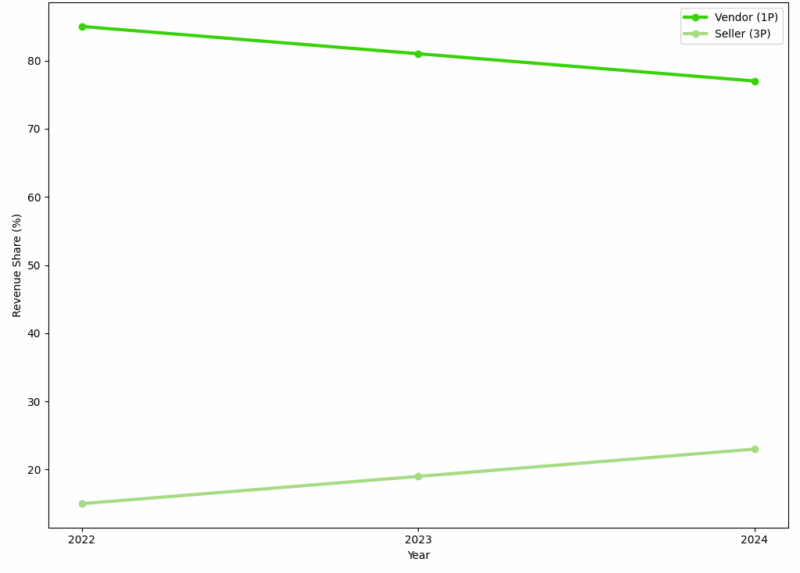
Vendor continues to dominate among legacy FMCG brands prioritising scale and distribution.
Seller adoption, however, is increasing among brands seeking greater pricing control and margin protection.
This is creating a structurally divided category.
Category Structure: Vendor vs Seller Brand Positioning
Vendor and Seller adoption varies significantly by brand.
Vendor remains the dominant operating model across the dog food category, particularly among large legacy FMCG manufacturers.
Seller adoption is significantly higher among premium and specialist brands, reflecting a strategic shift towards margin protection and pricing control.
This split reflects fundamentally different commercial objectives.
Vendor prioritises volume scale and distribution reach, while Seller enables brands to protect pricing, control positioning, and maximise profitability.
This structural divide is now a defining characteristic of the category.
Vendor prioritises:
- Scale
- Distribution reach
- Volume growth
Seller prioritises:
- Pricing control
- Margin protection
- Brand positioning
This strategic choice is now one of the primary determinants of category performance.
Pricing Analysis: Vendor vs Seller
A clear pricing divide exists between Vendor and Seller brands.
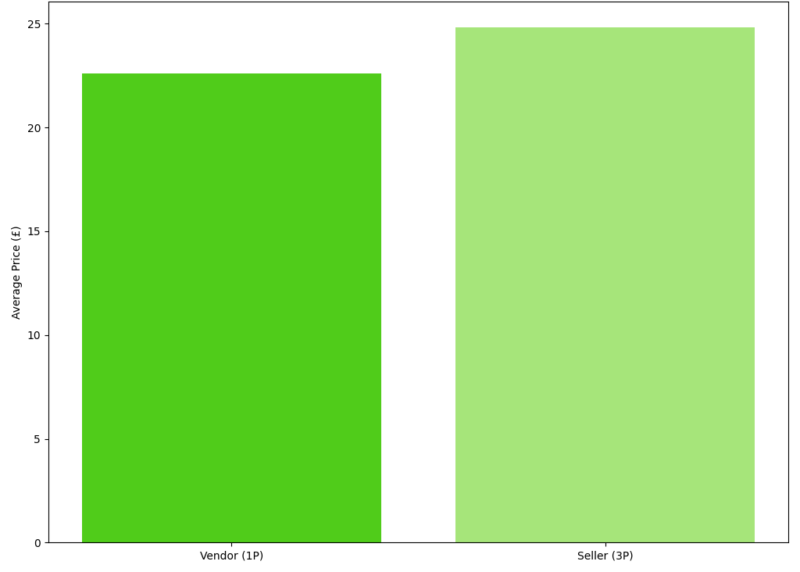
Seller-led brands operate at significantly higher average selling prices than Vendor-led competitors.
This pricing differential is not accidental. It reflects fundamentally different commercial objectives. Vendor optimises for scale efficiency, while Seller enables deliberate premium positioning and margin control.
Vendor-led brands compete more aggressively on price to maintain volume and distribution, while Seller-led brands prioritise pricing control and profitability.
Pricing strategy is now closely aligned to operating model, making it a defining structural characteristic of the category.
Market Share Dynamics
Market share movement shows that premium brands are gaining ground.
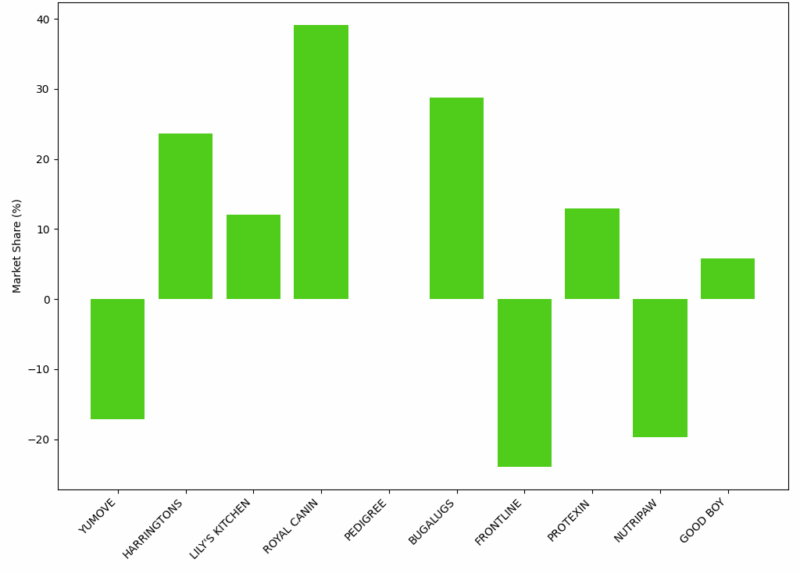
Royal Canin has delivered significant market share growth, despite operating primarily via Seller.
This demonstrates that commercial execution and pricing power can outperform scale alone.
Legacy Vendor-led brands continue to hold large overall share but are growing more slowly.
This indicates that market share growth is increasingly correlated with pricing power and commercial execution, rather than portfolio breadth alone.
Portfolio Scale and Product Count
Product count remains an important factor in category leadership.
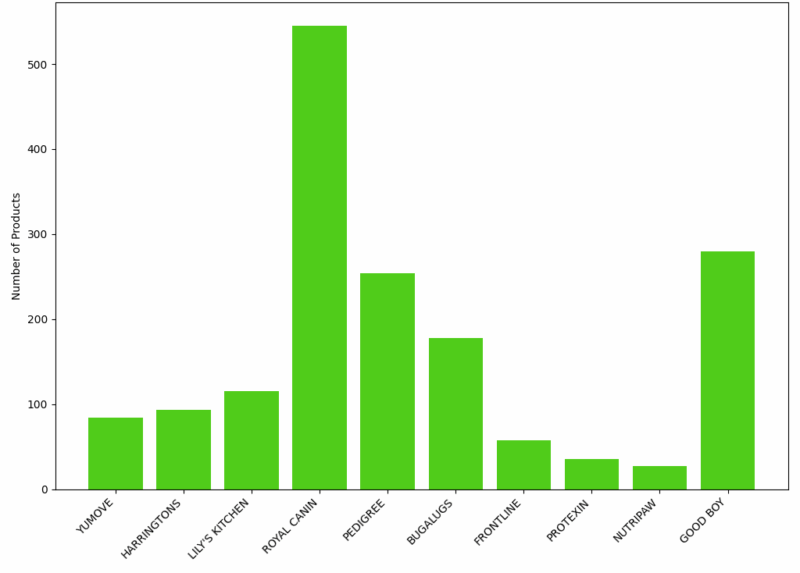
Vendor-led brands typically operate larger product portfolios, supporting greater visibility and scale. However, several Seller-led brands are generating strong revenue performance with fewer SKUs, reflecting higher revenue productivity per product.
Cat Food Category Analysis
Legacy FMCG brands including Whiskas, Felix, and Sheba continue to rely primarily on Amazon Retail.
Cat food remains heavily Vendor-dominated on Amazon UK, with the majority of category revenue driven through Amazon Retail.
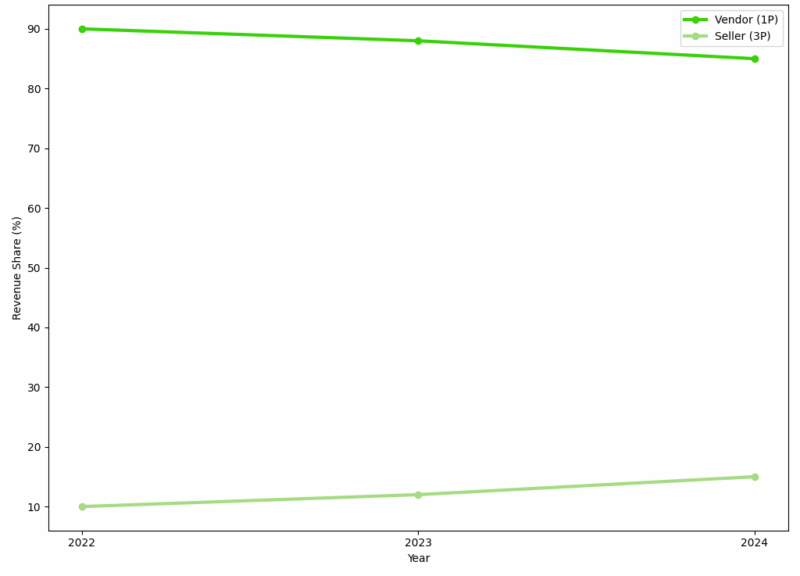
However, Seller is playing an increasingly important role among premium brands, enabling greater pricing control and supporting higher-margin growth.
Pricing Strategy and Positioning
Seller-led cat food brands also operate at higher price points.
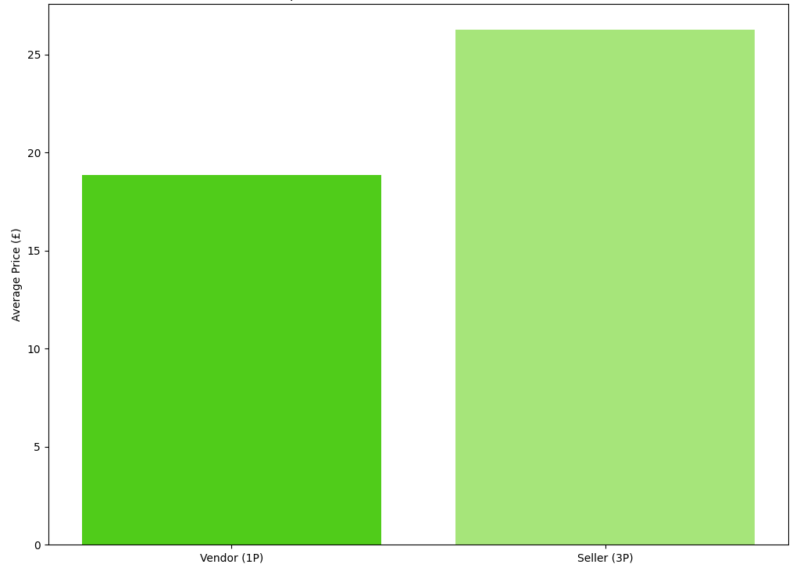
Premium positioning allows these brands to maintain stronger margins while competing effectively.
Vendor-led brands continue to prioritise scale and competitive pricing.
Market Share Movement
Market share trends confirm increasing premium brand penetration.
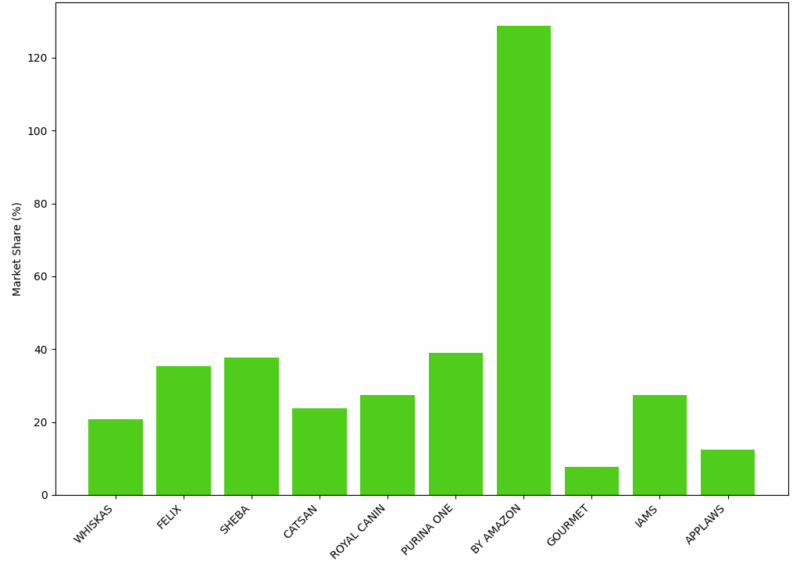
Premium and specialist brands are gaining share faster than traditional FMCG competitors.
This reflects growing consumer demand for premium nutrition products.
Premium Seller Growth Is Emerging
Across both dog and cat food, the category has now split into two distinct operating models.
Vendor-Led Model:
- Prioritises scale
- Driven by large FMCG brands
- Lower pricing control
- Greater margin pressure
Seller-Led Model:
- Prioritises control and profitability
- Used by premium and specialist brands
- Higher pricing power
- Faster market share growth
- Both models can succeed.
However, the strategic implications differ significantly.
Strategic Implications for Pet Food Brands
The Amazon pet food category is no longer defined solely by brand size.
Success now depends on:
- Operating model
- Pricing strategy
- Portfolio efficiency
- Commercial discipline
Vendor continues to dominate total revenue.
However, Seller-led brands are achieving faster growth and commanding higher prices.
This shift is structurally reshaping how brands compete, grow, and protect profitability on Amazon.
Brands that fail to actively manage their Amazon strategy risk losing market share to more commercially disciplined competitors.
Amazon is now a structurally competitive environment where operating model choice directly influences profitability, not just revenue. Brands that treat Amazon as a passive retail account risk losing both margin and market share to more commercially disciplined competitors.
Category Outlook
Based on current trajectories, the category is expected to see:
- Continued premiumisation
- Increasing Seller adoption
- Greater margin pressure on Vendor brands
- Further competitive fragmentation
The brands that win will be those that treat Amazon as a controlled commercial channel, not a passive retail account. Amazon is now a primary commercial battleground for pet food brands, not simply a distribution channel.
Executive Conclusion
The Amazon UK pet food category has entered a structurally mature phase.
Vendor remains dominant in total revenue.
However, Seller-led brands are gaining market share faster and achieving significantly higher price points.
This reflects a shift from scale-driven growth to commercially driven growth.
Success on Amazon is now determined by operating model design, pricing strategy, and commercial execution — not brand size alone.
Brands that recognise and adapt to this shift will define the next phase of category leadership.
Request Your Amazon Category Review
Many brands are surprised by what the data reveals.
Following this analysis, we are providing a limited number of Amazon category reviews for pet food brands.
Using the same dataset, this shows:
- Your market share position
- How your pricing compares to competitors
- Where margin is being gained or lost
- Your Vendor vs Seller exposure risk